Centralized vs decentralized exchanges
Comparing CEX and DEX: how traditional account-based trading differs from direct, wallet-to-wallet swaps.
If you want to trade one cryptocurrency for another, you will use a service called an exchange. As you explore, you will quickly notice there are two main kinds: centralized exchanges and decentralized exchanges. You will often hear them called CEXs and DEXs.
While these terms sound highly technical, the difference is actually very simple. It comes down to how you prefer to manage your assets: using a company-run account or using your own crypto wallet. Let’s look at how they work so you can choose the approach that feels right for you.
A simple analogy
Imagine you are traveling abroad and need to exchange currency:
- One way is to walk up to a bank service counter. You show your ID, open an account, and the teller processes the exchange for you. This is very close to how a centralized exchange works.
- Another way is to walk up to a self-service kiosk. You don’t show ID or sign up; instead, you plug in your cash, read the screen, and approve the swap yourself. This is very close to how a decentralized exchange works.
Neither method is automatically “better” than the other—they are simply different ways to do a similar job.
What is a centralized exchange?
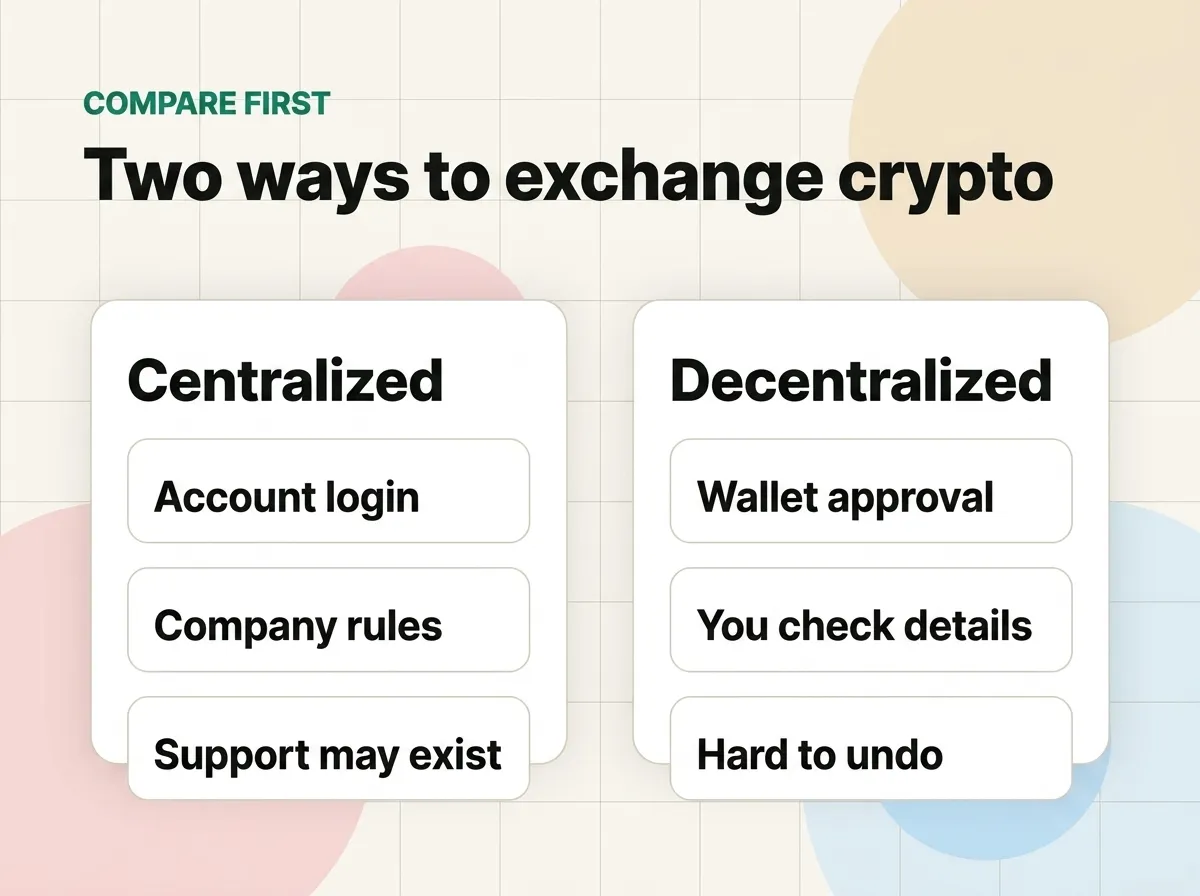
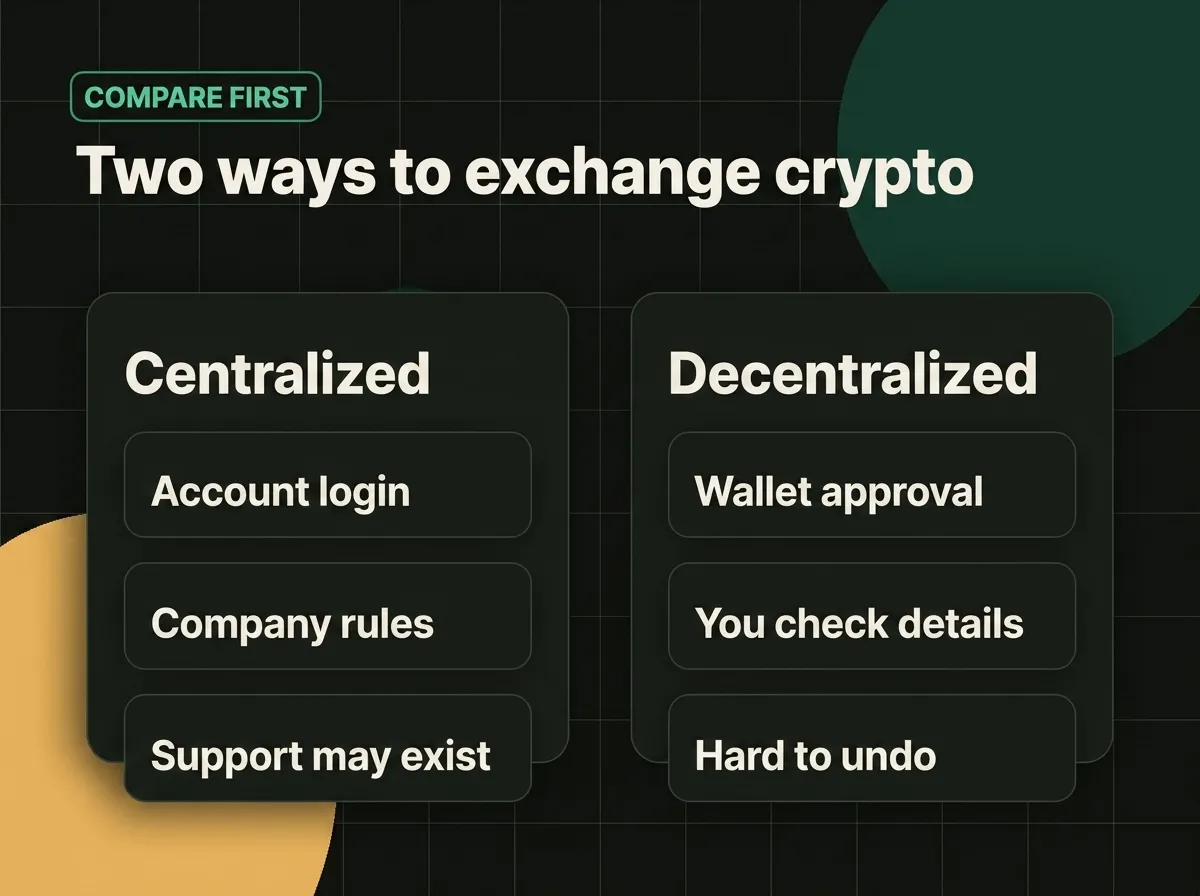
A centralized exchange is run by a company. When you use one, you create an account, log in with an email and password, and complete an identity check (often called KYC).
Examples like Binance feel very familiar because they operate like traditional online banking apps. They offer security settings, password resets, trade histories, and customer support desks.
The trade-off is trust. When you hold assets on a centralized exchange, you are trusting the company to keep your funds safe, comply with local laws, and process your transactions carefully. It is convenient, but you must follow their specific rules and limits.
What is a decentralized exchange?
A decentralized exchange is wallet-based. Instead of registering for an account, you connect your own crypto wallet directly to the platform’s webpage. The exchange lists available assets, and you approve swaps directly from your wallet.
The benefit is direct control: you never have to trust a company to hold your funds. However, the trade-off is complete responsibility. If you choose the wrong network, swap for a fake token, or make a mistake, there is no customer support team to help you recover your assets.
Centralized Exchanges: Benefits and Risks
Why people choose them:
- Familiarity: They feel like standard online brokerage accounts.
- Support: You can reset passwords and contact a customer service team if you run into issues.
- Easy fiat onboarding: They usually support linking bank accounts or cards to buy crypto directly.
Risks to consider:
- Company dependency: You must trust the platform to remain secure and solvent.
- Account freezes: The company can freeze or lock your account for compliance reviews.
- Identity sharing: You must share personal documents during sign-up.
Decentralized Exchanges: Benefits and Risks
Why people choose them:
- Independence: You keep full control of your keys and funds at all times.
- Privacy: No sign-up or personal information is required.
- Variety: They often list new or niche tokens that centralized exchanges don’t support.
Risks to consider:
- No support: You cannot recover lost passwords or reverse mistaken transactions.
- Technical confusion: Managing networks, slippage, and gas fees can be overwhelming for beginners.
- Scam tokens: Anyone can list a token on a DEX, making it easy to buy fake copies of popular assets by mistake.
Which one should you choose?
If you are brand new, starting with a centralized exchange is often the most comfortable first step because the account setup and customer support provide a safety net.
As you gain confidence and understand how crypto wallets, gas fees, and network approvals work, you can begin exploring decentralized swaps with small amounts.
There is no need to rush into choosing. Start by learning the basics first, and use whichever option matches the level of responsibility you are comfortable taking.
A quick checklist before you start
If you use a centralized exchange:
- Are you on the official website or app?
- Have you enabled strong account security, like two-factor authentication (2FA)?
- Do you understand their deposit and withdrawal fees?
If you use a decentralized exchange:
- Do you understand the message your wallet is asking you to sign?
- Are you on the correct blockchain network?
- Have you verified the contract address of the token you want to buy?
In summary
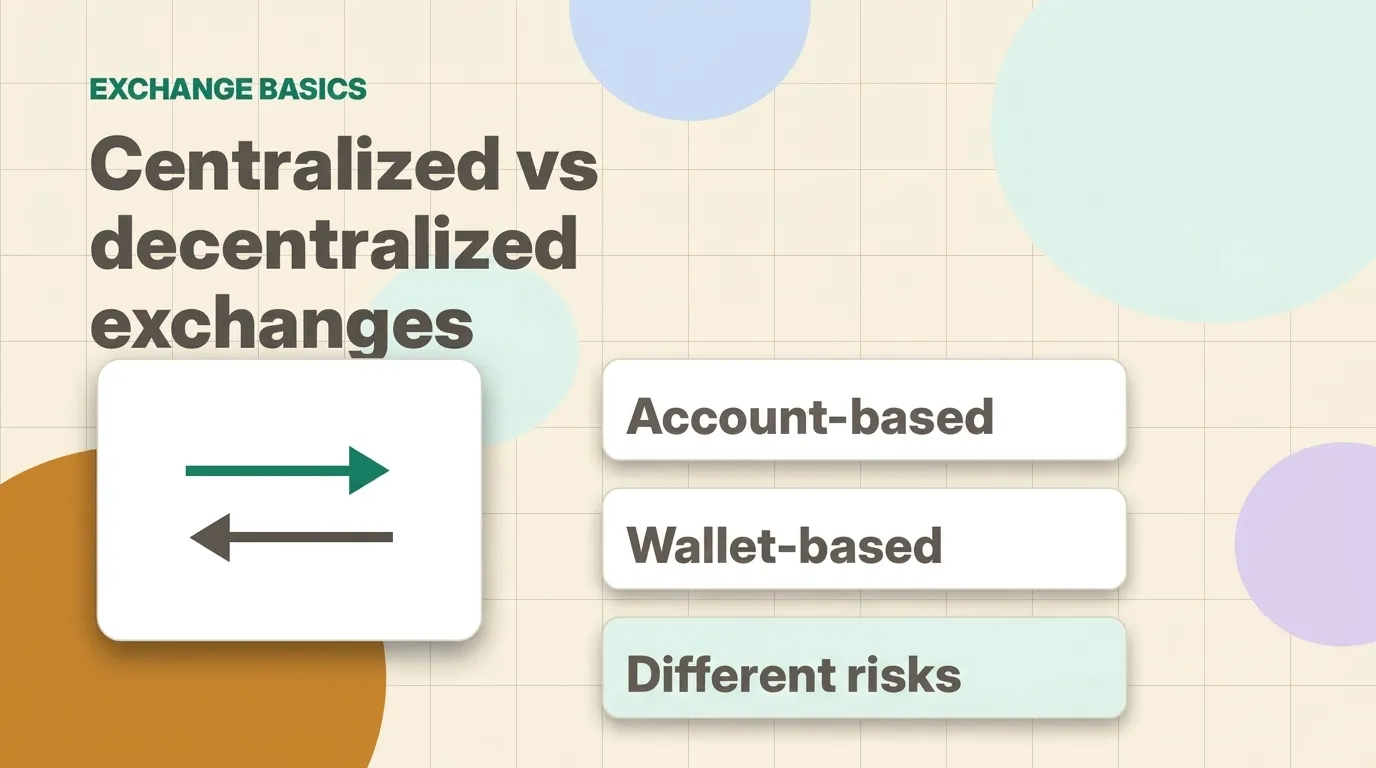
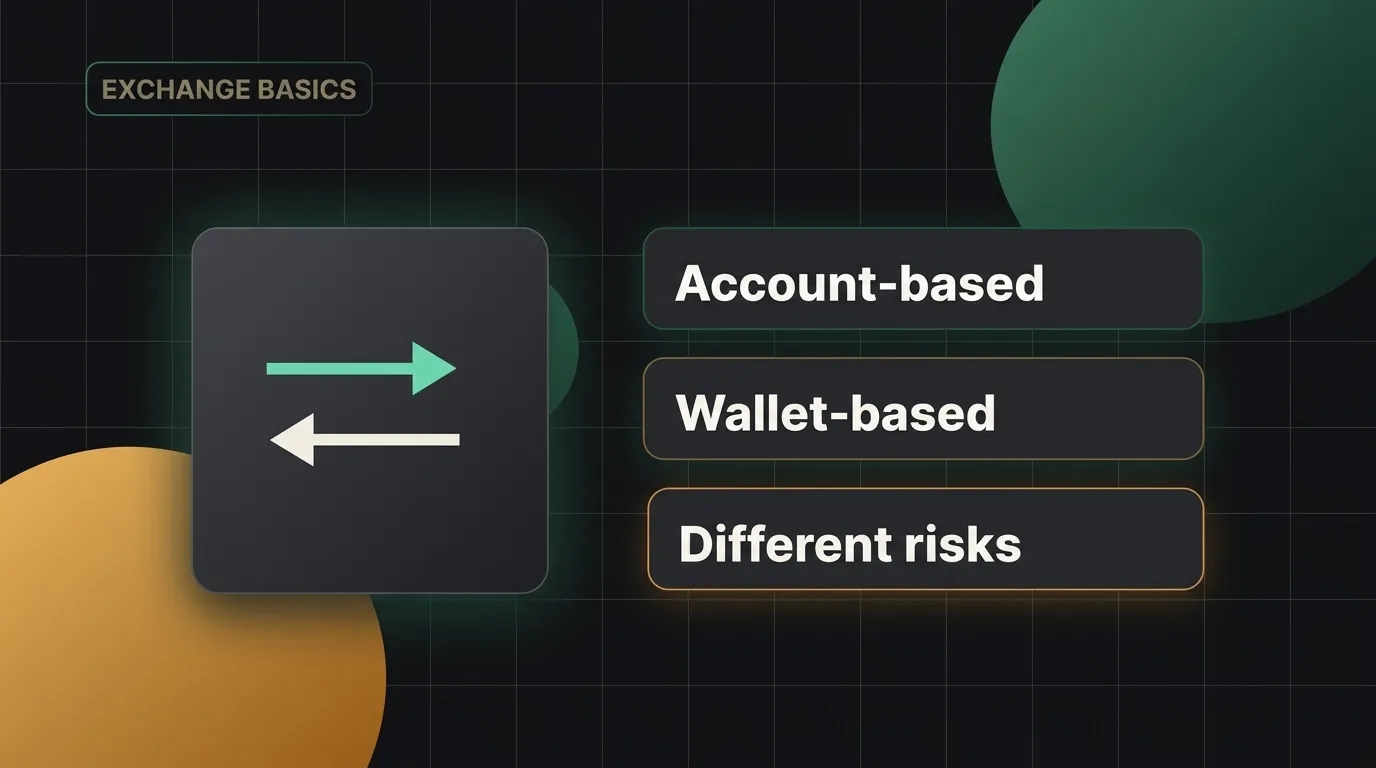
A centralized exchange is account-based and run by a company, while a decentralized exchange is wallet-based and asks you to approve actions yourself. Both have valuable uses and distinct risks. By going slowly and understanding what you are opening or approving, you can navigate both options safely.